
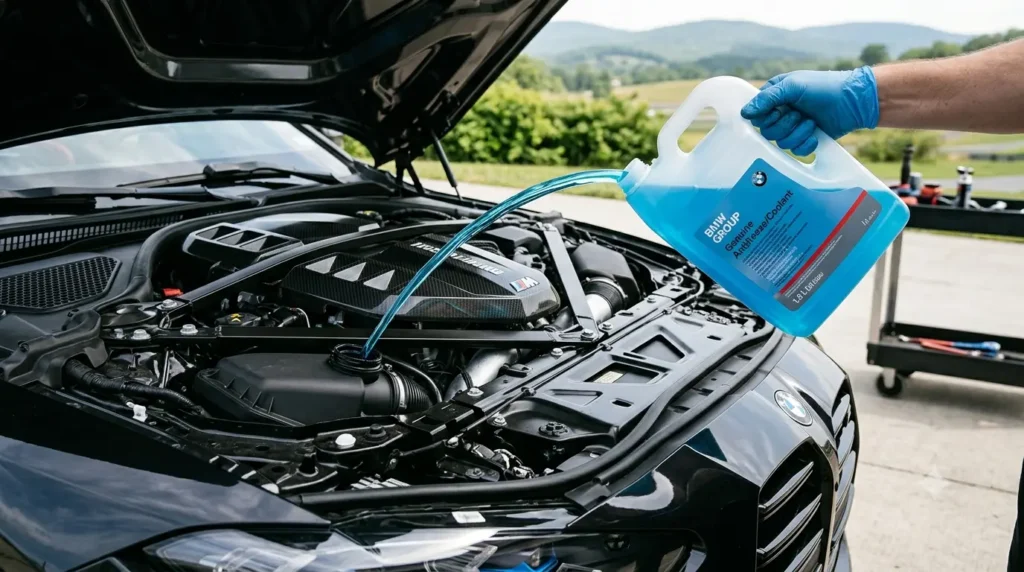
If you own a BMW or are planning to buy one, understanding coolant fluid BMW is one of the easiest ways to protect your engine and avoid expensive repairs. Many drivers only think about coolant when a warning light appears, but waiting until then can lead to overheating, poor engine performance, or even severe engine damage.
In my experience working with vehicle maintenance guides and talking with BMW owners, one of the most common mistakes is assuming coolant lasts forever. In reality, your BMW engine coolant plays a vital role in keeping the engine running at the correct temperature in every season. This guide explains everything you need to know, from choosing the right coolant to recognizing warning signs before they become costly problems.
Content
What Is Coolant Fluid BMW?
Coolant fluid BMW is a specially formulated liquid that circulates through your vehicle’s BMW coolant system. Its primary job is to regulate engine temperature by absorbing excess heat and releasing it through the radiator.
Unlike plain water, BMW antifreeze contains corrosion inhibitors and additives that protect aluminum engine components, water pumps, hoses, and the radiator from rust and mineral buildup.
Using the correct BMW coolant type helps:
- Prevent engine overheating
- Protect against freezing during winter
- Reduce corrosion inside the cooling system
- Improve engine efficiency
- Extend the lifespan of cooling system components
Simply put, coolant is essential for keeping your BMW reliable in both hot and cold weather.
Why Is Coolant So Important for BMW Vehicles?
BMW engines are engineered with tight performance tolerances. They operate at higher temperatures than many standard vehicles, making the cooling system even more important.
Without enough coolant, the engine temperature rises rapidly. This can result in:
- Warped cylinder heads
- Damaged head gaskets
- Cracked engine components
- Reduced fuel efficiency
- Expensive repair bills
Keeping your BMW cooling system in good condition is far less expensive than replacing an overheated engine.
Which Coolant Fluid Is Safe for BMW Models?
One of the most searched questions is which coolant fluid is safe for BMW models.
BMW recommends using genuine BMW coolant or an approved phosphate-free, nitrite-free coolant specifically designed for European vehicles.
Avoid universal coolants unless the manufacturer clearly states they meet BMW specifications.
Using the wrong coolant may reduce corrosion protection and shorten the life of your cooling system.
How to Check Coolant Fluid BMW
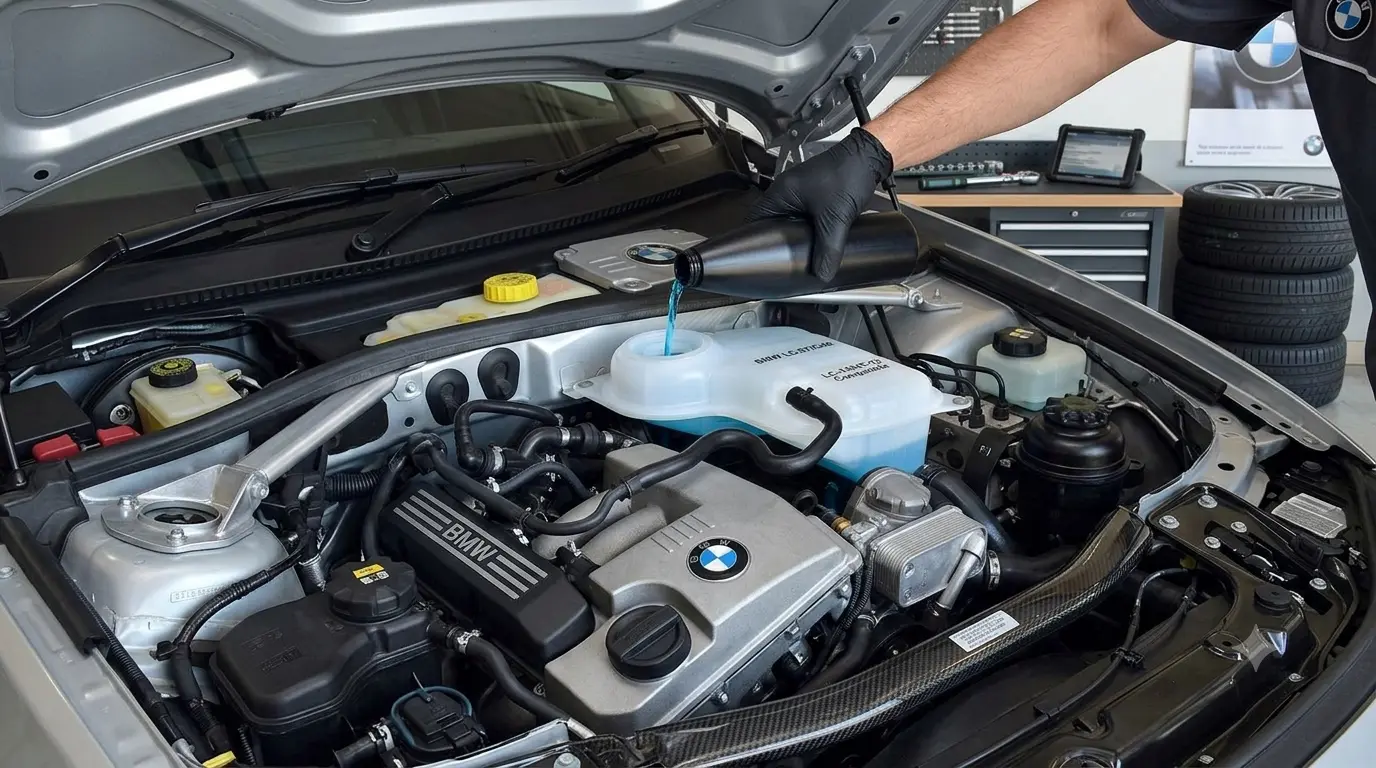
Many owners ask how to check coolant fluid BMW correctly.
Fortunately, it’s a simple maintenance task.
Step 1: Let the Engine Cool
Never open the coolant reservoir while the engine is hot. The system is pressurized and can release extremely hot coolant.
Step 2: Locate the BMW Coolant Reservoir
Open the hood and find the transparent BMW coolant reservoir near the radiator.
Step 3: Check the Coolant Level
The reservoir has MIN and MAX markings. Your BMW coolant level should remain between these indicators.
If it’s below the MIN mark, it’s time to top it up.
Step 4: Inspect the Coolant
Healthy coolant should appear clean and maintain its original color. Dirty, rusty, or contaminated coolant indicates it may need replacing.
How to Add Coolant Fluid BMW Safely
Another common question is how to add coolant fluid BMW.
Follow these simple steps:
- Wait until the engine is completely cool.
- Slowly remove the coolant reservoir cap.
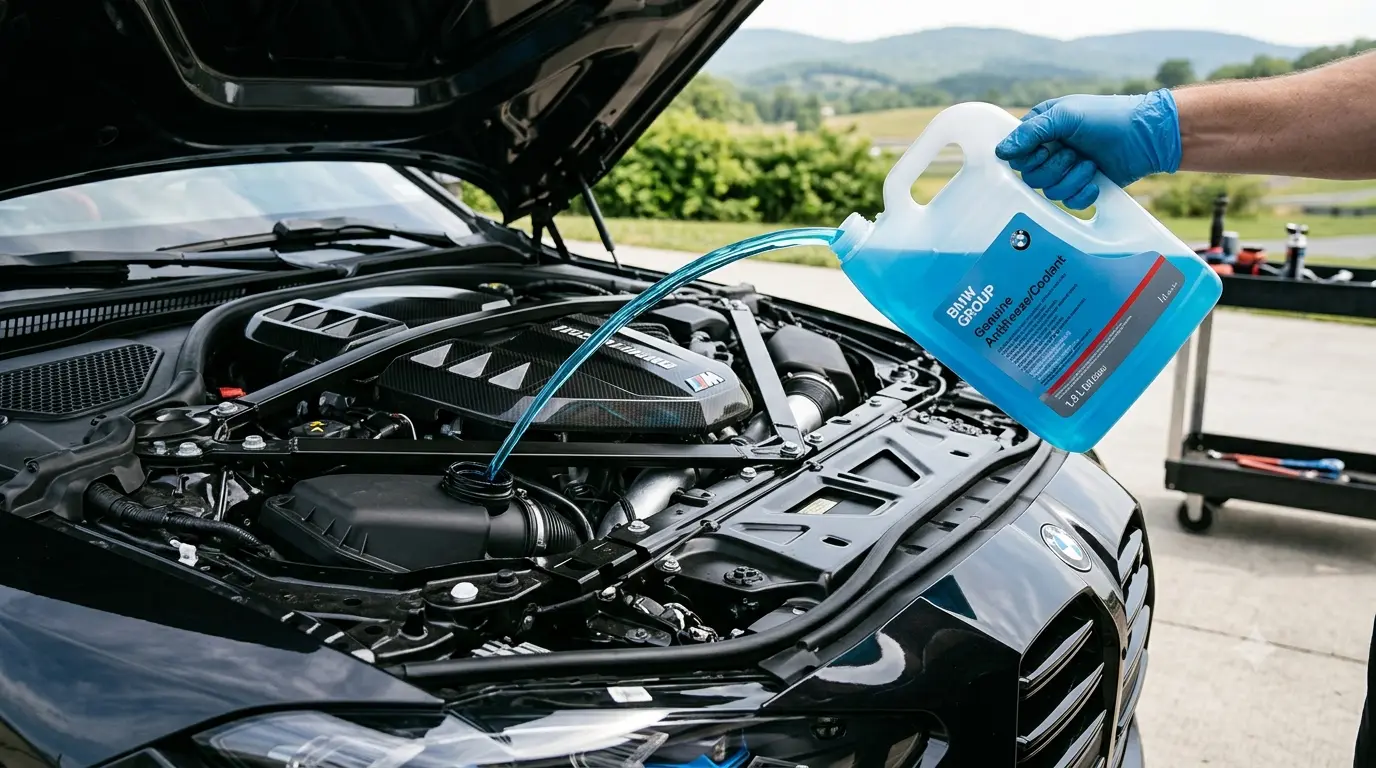
- Pour the recommended coolant mixture into the reservoir.
- Do not overfill above the MAX line.
- Secure the cap tightly.
- Start the engine and check for leaks.
If you’re wondering how to refill coolant fluid in a BMW, always follow your owner’s manual and use the recommended coolant mixture.
Best Coolant Fluid for BMW
Choosing the best coolant fluid for BMW depends on your vehicle model and manufacturer recommendations.
Most experts recommend:
- Genuine BMW Coolant
- BMW-approved European vehicle coolant
- Phosphate-free coolant
- Silicate-compatible coolant where applicable
Always verify compatibility before purchasing.
When Should You Replace Coolant Fluid BMW?
Many drivers ask when to replace coolant fluid BMW.
Although service intervals vary by model, many experts recommend inspecting coolant every service visit and replacing it approximately every 2–4 years or according to the maintenance schedule.
Following a proper BMW coolant fluid replacement guide helps maintain optimal engine performance and protects expensive cooling system components.
Signs Your BMW Needs Coolant Service
Watch for these warning signs:
- Rising engine temperature
- Steam from under the hood
- Sweet smell inside or outside the vehicle
- Visible coolant leaks
- Frequent low coolant levels
- Poor heater performance
These symptoms often indicate your BMW coolant replacement shouldn’t be delayed.
Why Is My BMW Coolant Fluid Low?
Many owners wonder, why is my BMW coolant fluid low even when there are no obvious leaks.
Common causes include:
- Small hose leaks
- Evaporation over time
- Worn radiator cap
- Water pump problems
- Radiator damage
- Expansion tank cracks
If coolant levels continue dropping, have the vehicle inspected promptly.
BMW Coolant Warning Light Meaning
Understanding the BMW coolant warning light meaning can help prevent engine damage.
The warning light usually indicates:
- Low coolant level
- Engine overheating
- Cooling system malfunction
- Faulty coolant sensor
Do not ignore this warning. Pull over safely if engine temperature continues rising.
Can You Mix BMW Coolant with Other Coolants?
A frequently asked question is can you mix BMW coolant with other coolants.
In most cases, the answer is no.
Different coolant formulas use different chemical additives. Mixing incompatible coolants can reduce corrosion protection, create sludge, and decrease cooling performance.
When in doubt, completely flush the system before changing coolant types.
Common Mistakes BMW Owners Should Avoid
Even experienced drivers sometimes make these mistakes:
- Using tap water instead of distilled water
- Mixing different coolant brands
- Ignoring coolant leaks
- Driving with a coolant warning light
- Overfilling the coolant reservoir
- Skipping regular coolant inspections
Avoiding these simple mistakes can save thousands in repair costs.
Real-Life Case Study: A Small Leak That Became a Big Repair
A BMW 3 Series owner noticed the coolant warning light appearing occasionally but assumed it was a faulty sensor. Every few weeks, they added coolant without investigating the cause.
Eventually, the engine began overheating during highway driving. A technician discovered a small crack in the expansion tank that had slowly leaked coolant over several months.
The repair required replacing the expansion tank, hoses, and performing a complete cooling system service. Fortunately, the owner stopped driving before major engine damage occurred. Had the issue been ignored longer, the repair could have included a damaged head gasket, costing several times more.
This example shows why monitoring your BMW coolant level and addressing warning signs early can prevent much larger repair bills.
Expert Tips for Maintaining Your BMW Cooling System
To keep your BMW performing its best:
- Check coolant levels monthly.
- Use only the recommended BMW coolant type.
- Inspect hoses and clamps regularly.
- Watch for leaks under the vehicle.
- Replace coolant according to the maintenance schedule.
- Respond immediately to any BMW coolant warning light.
These simple habits can significantly extend the life of your BMW cooling system.
Conclusion
Understanding coolant fluid BMW is essential for protecting your engine and avoiding unnecessary repair costs. Whether you’re checking the BMW coolant reservoir, choosing the best coolant fluid for BMW, or learning how to check coolant fluid BMW, regular maintenance goes a long way toward keeping your vehicle reliable.
A healthy BMW engine coolant system doesn’t just prevent overheating—it also improves engine efficiency, protects vital components, and gives you greater confidence on every drive. By using the correct coolant, monitoring your BMW coolant level, and responding quickly to warning signs, you’ll help ensure your BMW continues to perform the way it was designed to for years to come.
Frequently Asked Questions
How often should you change BMW coolant fluid?
Most BMW models require coolant replacement every 2–4 years or according to the manufacturer’s maintenance schedule
What happens if coolant fluid BMW is low?
Low coolant can cause overheating, poor engine performance, and serious engine damage if ignored.
Can I use regular antifreeze in my BMW?
No. Always use genuine BMW coolant or a BMW-approved coolant designed for European vehicles.
How do I know if my BMW needs coolant replacement?
Discolored coolant, recurring low coolant levels, overheating, or warning lights are common signs that service is needed.
Is checking coolant part of routine BMW maintenance?
Yes. Inspecting the coolant level during routine maintenance helps identify problems before they become expensive repairs.

Safety is Mark’s top priority. His blog isn’t just advice; it’s a guardian angel for drivers. Stay informed about the latest safety features, and drive with confidence, knowing Mark has your back.