
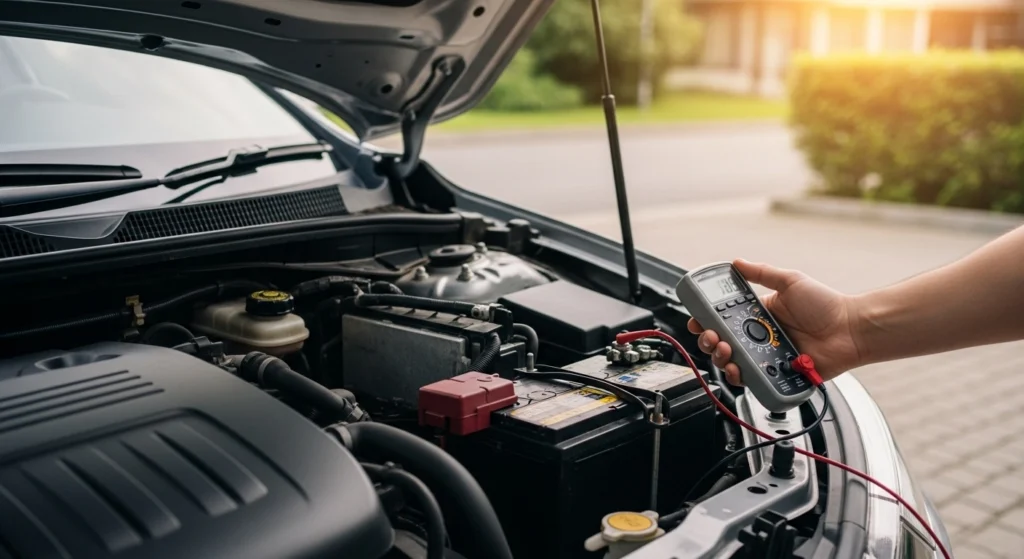
A dead battery has a way of picking the worst possible moment to fail. Whether you’re rushing to work, planning a road trip, or picking up the kids, a car that won’t start can quickly disrupt your day. The good news is that learning how to test car battery condition is easier than many people think, and it can help you avoid unexpected breakdowns.
You don’t need to be a professional mechanic to perform a car battery test. With a few basic tools—or even without one in some cases—you can evaluate your battery’s condition, spot early warning signs, and decide whether it’s time for maintenance or replacement.
In this guide, you’ll learn how to test your battery safely, understand the readings, and know what to do if the results aren’t ideal.
Content
Why Testing Your Car Battery Matters
Your car battery powers the starter motor, ignition system, lights, and many electronic components. As batteries age, their performance gradually declines, making regular battery health check routines an important part of vehicle maintenance.
Testing your battery can help you:
- Prevent unexpected breakdowns
- Identify a weak car battery before it completely fails
- Improve overall vehicle reliability
- Extend your battery’s lifespan
- Save money by replacing the battery only when necessary
Experts recommend checking battery health at least twice a year, especially before extreme summer or winter temperatures.
Common Signs of a Weak Car Battery
Before learning how to test car battery at home, it’s helpful to recognize early warning signs.
Look for these symptoms:
- Slow engine cranking
- Dim headlights
- Clicking sound when turning the key
- Dashboard battery warning light
- Electrical accessories working poorly
- Frequent jump starts
- Swollen battery case
- Visible battery corrosion around the battery terminals
If you notice one or more of these signs, it’s time to inspect your battery.
Tools You Need for a Car Battery Test
Fortunately, testing a battery doesn’t require expensive equipment.
Useful tools include:
- A digital multimeter
- Safety gloves
- Safety glasses
- Battery terminal cleaning brush
- Wire brush
- Battery charger (if needed)
A digital multimeter provides the most accurate results for checking car battery voltage.
How to Test Car Battery with a Multimeter

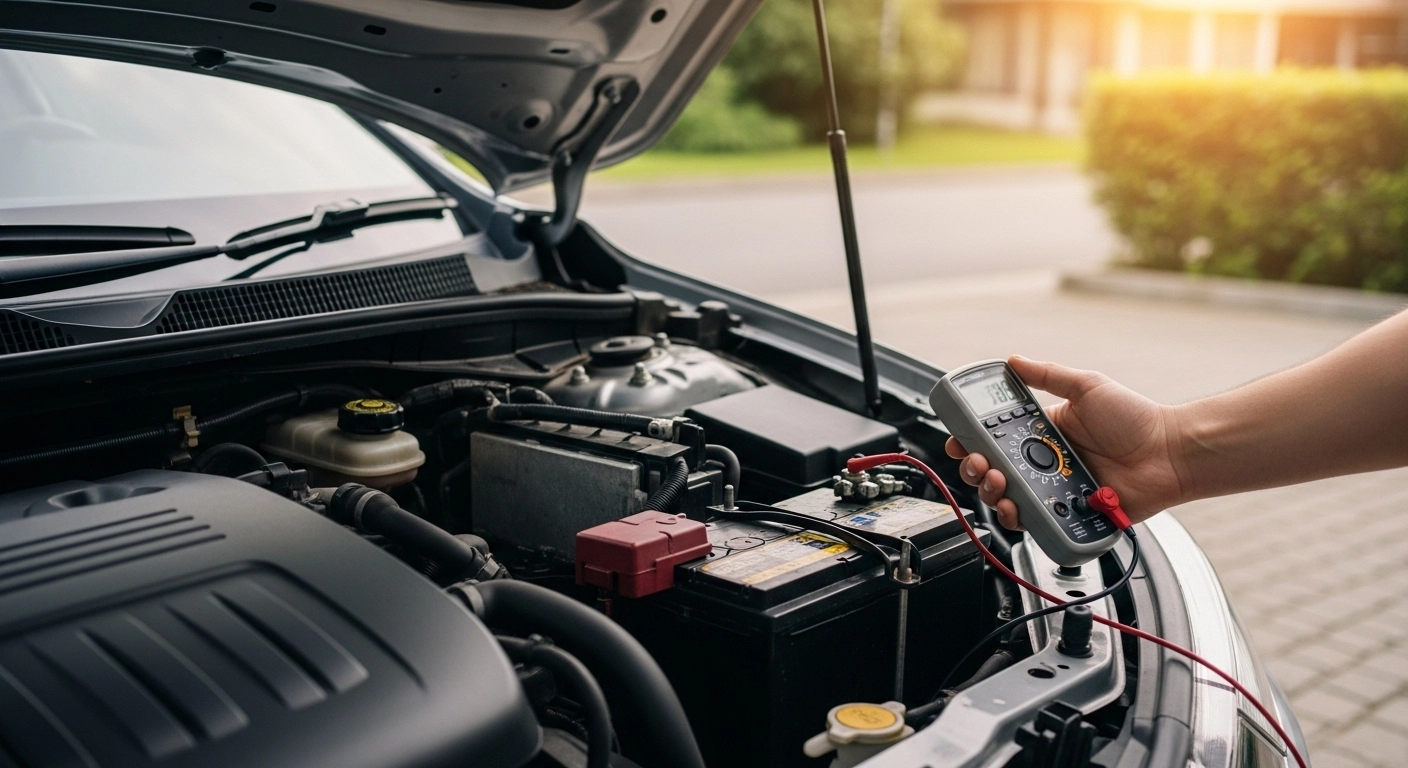
If you’re wondering how to test car battery with a multimeter, follow these simple steps.
Step 1: Turn Off the Vehicle
Make sure the engine is completely off and remove the key from the ignition.
Wait for at least 30 minutes after driving so the battery reaches its resting voltage.
Step 2: Inspect the Battery
Before measuring voltage, perform a quick visual inspection.
Check for:
- Loose connections
- Damaged casing
- Leaking battery acid
- Dirty or corroded terminals
Clean the terminals if necessary before testing.
Step 3: Set the Multimeter
Switch your multimeter to DC voltage.
Choose the 20V setting if your meter isn’t auto-ranging.
Step 4: Connect the Probes
Place:
- Red probe on the positive (+) terminal
- Black probe on the negative (-) terminal
Make sure both probes make solid contact.
Step 5: Read the Voltage
Here’s what the reading usually means:
| Voltage | Battery Condition |
| 12.6V–12.8V | Fully charged |
| 12.4V | About 75% charged |
| 12.2V | Around 50% charged |
| 12.0V | Low charge |
| Below 12.0V | Recharge or replace soon |
Knowing what voltage should a healthy car battery read makes it much easier to determine whether your battery is still reliable.
How to Test Car Battery Without a Multimeter
Many drivers ask how to test car battery without a multimeter.
Although this method isn’t as accurate, you can still perform basic checks.
Headlight Test
Turn on the headlights without starting the engine.
If they appear:
- Bright → Battery may still be healthy.
- Dim → Battery charge may be low.
Listen During Startup
If the starter turns slowly or struggles to crank the engine, the battery could be weakening.
Observe Electronics
Slow power windows, flickering dashboard lights, or weak infotainment performance may indicate battery issues.
These checks won’t replace proper voltage testing but can help identify obvious problems.
How to Check Car Battery Voltage Correctly
Understanding how to check car battery voltage correctly prevents inaccurate readings.
Keep these tips in mind:
- Test after the vehicle has rested.
- Avoid testing immediately after charging.
- Ensure clean battery terminals.
- Use a reliable multimeter.
- Repeat the measurement if results seem unusual.
Consistent readings provide a more accurate picture of battery health.
How to Perform a Car Battery Load Test
A voltage test only tells part of the story.
Learning how to perform a car battery load test provides deeper insight into battery performance under real operating conditions.
During a load test, a specialized tester places the battery under electrical demand similar to starting the engine.
If the voltage drops too low during testing, the battery may no longer deliver enough power, even if it appears fully charged.
Many repair shops perform this test within minutes.
How to Tell if the Battery or Alternator Is the Problem
Sometimes the battery isn’t actually at fault.
Many people wonder how to tell if the battery or alternator is the problem.
A simple approach is to:
- Test the battery before starting the engine.
- Start the vehicle.
- Measure voltage again.
A healthy charging system typically produces around 13.8V–14.7V while the engine is running.
If charging voltage remains low, the alternator may need inspection instead of replacing the battery.
Real-Life Case Study: A Five-Minute Test Saved an Expensive Tow
A friend of mine planned a weekend road trip with his family. The evening before leaving, he noticed the engine cranked slightly slower than usual. Instead of ignoring it, he decided to perform a quick car battery test using a digital multimeter.
The resting voltage measured only 11.9 volts. After charging the battery overnight, the voltage quickly dropped again, indicating the battery could no longer hold a proper charge.
He replaced the battery the next morning before starting his trip.
A week later, the technician confirmed the old battery had reached the end of its lifespan. Had he ignored the warning signs, the battery likely would have failed hundreds of miles from home, leading to towing charges and unnecessary delays.
This simple experience highlights why regular battery testing is far less expensive than dealing with roadside emergencies.
Tips to Extend Battery Life
Once you’ve learned how to test car battery, keeping it healthy becomes much easier.
Follow these maintenance tips:
- Keep battery terminals clean.
- Tighten loose cable connections.
- Avoid leaving lights on.
- Drive regularly to keep the battery charged.
- Turn off accessories before shutting off the engine.
- Protect the battery from extreme temperatures whenever possible.
- Schedule periodic battery inspections.
Proper car battery maintenance can significantly increase battery lifespan.
When Should You Replace Your Car Battery?
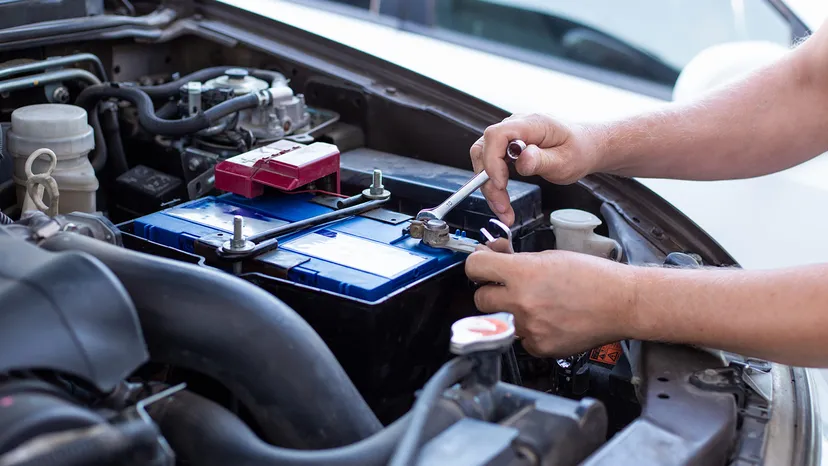
Most batteries last between three and five years, depending on climate, driving habits, and maintenance.
Consider replacing your battery if:
- It repeatedly loses charge.
- It fails a battery load test.
- Voltage remains low after charging.
- Starting becomes unreliable.
- The battery case is swollen or leaking.
Replacing an aging battery before complete failure can prevent inconvenient roadside breakdowns.
Final Thoughts
Knowing how to test car battery is a practical skill that every vehicle owner should have. A quick battery check takes only a few minutes but can prevent inconvenient breakdowns, expensive towing costs, and unnecessary stress.
Whether you’re learning how to test car battery with a multimeter, figuring out how to test car battery without a multimeter, or simply trying to identify signs of a weak car battery, regular inspections give you confidence that your vehicle is ready for the road.
Make battery testing part of your routine maintenance schedule, and you’ll be far less likely to face an unexpected no-start situation. A few minutes of preventive care today can save hours of frustration tomorrow.
FAQs About How to Test Car Battery
How can I test my car battery at home?
You can use a digital multimeter to measure resting voltage or perform simple visual and headlight checks for a basic assessment.
Can you test a car battery without removing it?
Yes. Most batteries can be tested while installed as long as you have safe access to the battery terminals.
What voltage should a healthy car battery read?
A fully charged battery typically reads between 12.6 and 12.8 volts with the engine off.
How often should I test my car battery?
Testing every six months is recommended, especially before long trips or seasonal weather changes.
Can a battery test good but still fail later?
Yes. Batteries may pass a voltage test but fail under heavy electrical load, which is why a professional load test can provide additional confidence.

Safety is Mark’s top priority. His blog isn’t just advice; it’s a guardian angel for drivers. Stay informed about the latest safety features, and drive with confidence, knowing Mark has your back.